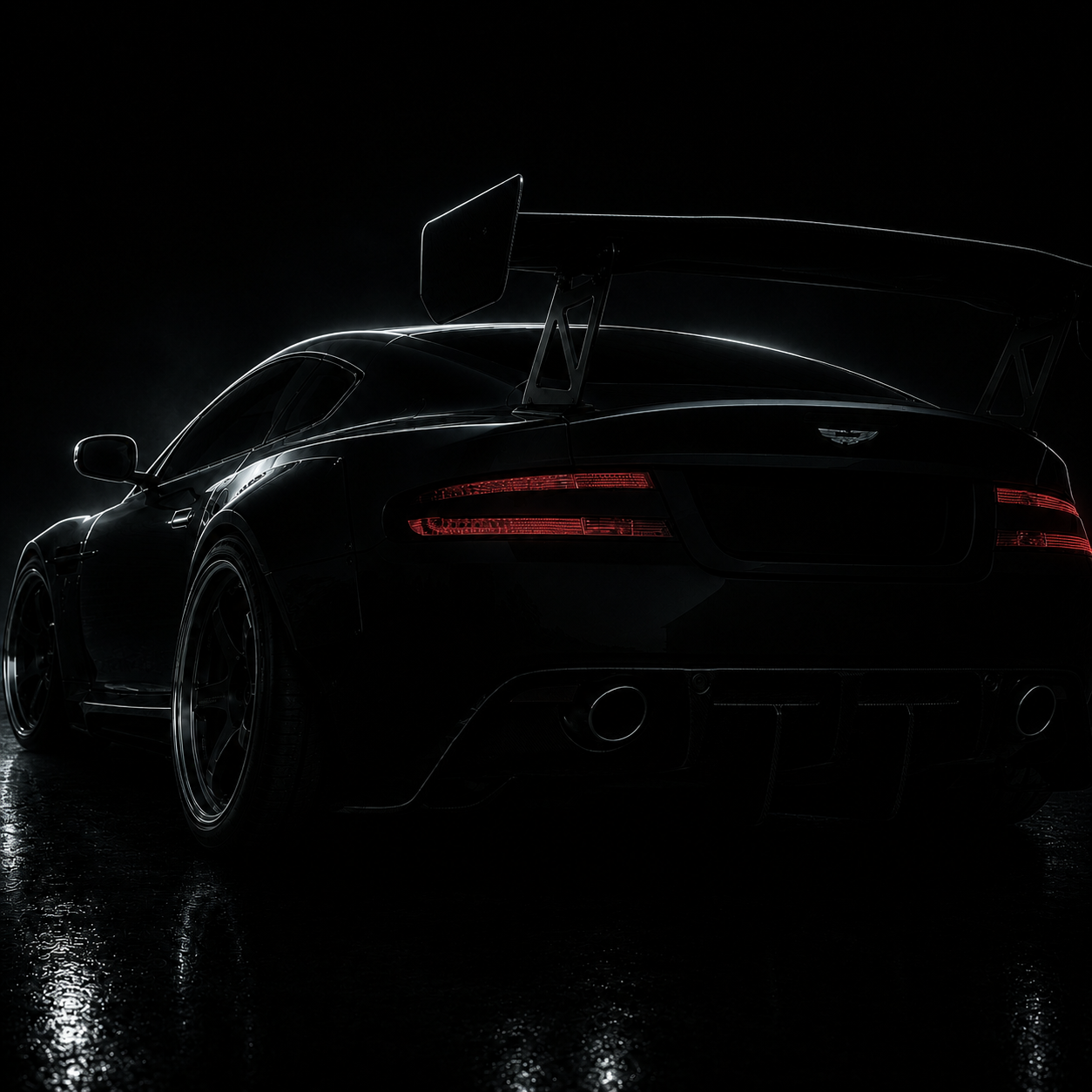
Dark rear three-quarter concept view of Project DBR9, with a large rear wing

McCarbon Racing

Engineered for
the circuit.

CFD-led aerodynamics. Lightweight composites.
Track-focused machines.

Our approach

CAD / CFD / CARBON / TRACK

Project DBR9 · Concept artwork

Current programmes

Two icons.
Reimagined.

McCarbon Racing is developing two distinct performance programmes: a CFD-led Nissan 370Z time-attack car and a modern interpretation of the Aston Martin DBR9.

Each project brings together aerodynamic development, lightweight composite construction and a clear purpose on track.

Engineering approach

Designed
with intent.

Every component begins with a defined performance objective. CAD design, CFD simulation and composite development form one connected process.

We consider each surface as part of the complete vehicle, with attention to aerodynamic balance, cooling, weight and practical manufacture.

Discover our approach

Every surface.
Every component.
One purpose.

The development process

From concept to circuit.

A connected process, from the first performance targets to physical parts and track evaluation. Each stage informs the next.

Simulation guides the design. Manufacturing requirements shape the detail. Track testing is the next measure of how the complete vehicle performs.

Explore our process
01Define & design

Set the performance targets, vehicle packaging and competition requirements. Develop the geometry in CAD, with the complete vehicle and its interfaces in view.

Targets → CAD
02Simulate & refine

Use CFD to compare geometry changes and examine airflow, forces and cooling paths. Record the numerical limits of each comparison before deciding what to carry forward.

CAD → CFD
03Develop & manufacture

Translate the design into tooling and composite components. Consider material choice, stiffness, mounting, access and serviceability alongside weight and surface finish.

Design → Carbon
04Test & learn

Evaluate the physical vehicle on track and compare observations with the design objectives. Use that evidence to guide the next development cycle.

Carbon → Track

The engineering

Performance is in the detail.

01 / AERODYNAMICS

Aero development.

CFD-led performance.

From complete vehicle airflow to splitters, wings, diffusers and cooling ducts, every surface is developed around a clear performance target.

Simulation-led iteration helps us assess downforce, drag, balance and cooling before physical parts are produced.

Explore aerodynamics

The vehicle is treated as an interacting system. A change at the front can affect the floor, the rear wing and the cooling flow. Package-level comparisons help guide component choices.

See Project Z
02 / COMPOSITES

Composite engineering.

Lightweight by design.

Carbon-fibre bodywork and components are developed with mass, stiffness and durability in mind.

From CAD geometry and mould design to manufacture and installation, the detail must support fit, finish and serviceability on the vehicle.

Explore composites

Material and construction choices follow the component's role. Mounting points, load paths, tooling and access all form part of the design, alongside the aerodynamic surface.

See Project DBR9